
“Every banker knows that if he has to prove that he is worthy of credit, however good may be his arguments, in fact his credit is gone.”
— Walter Bagehot, Lombard Street (1873)
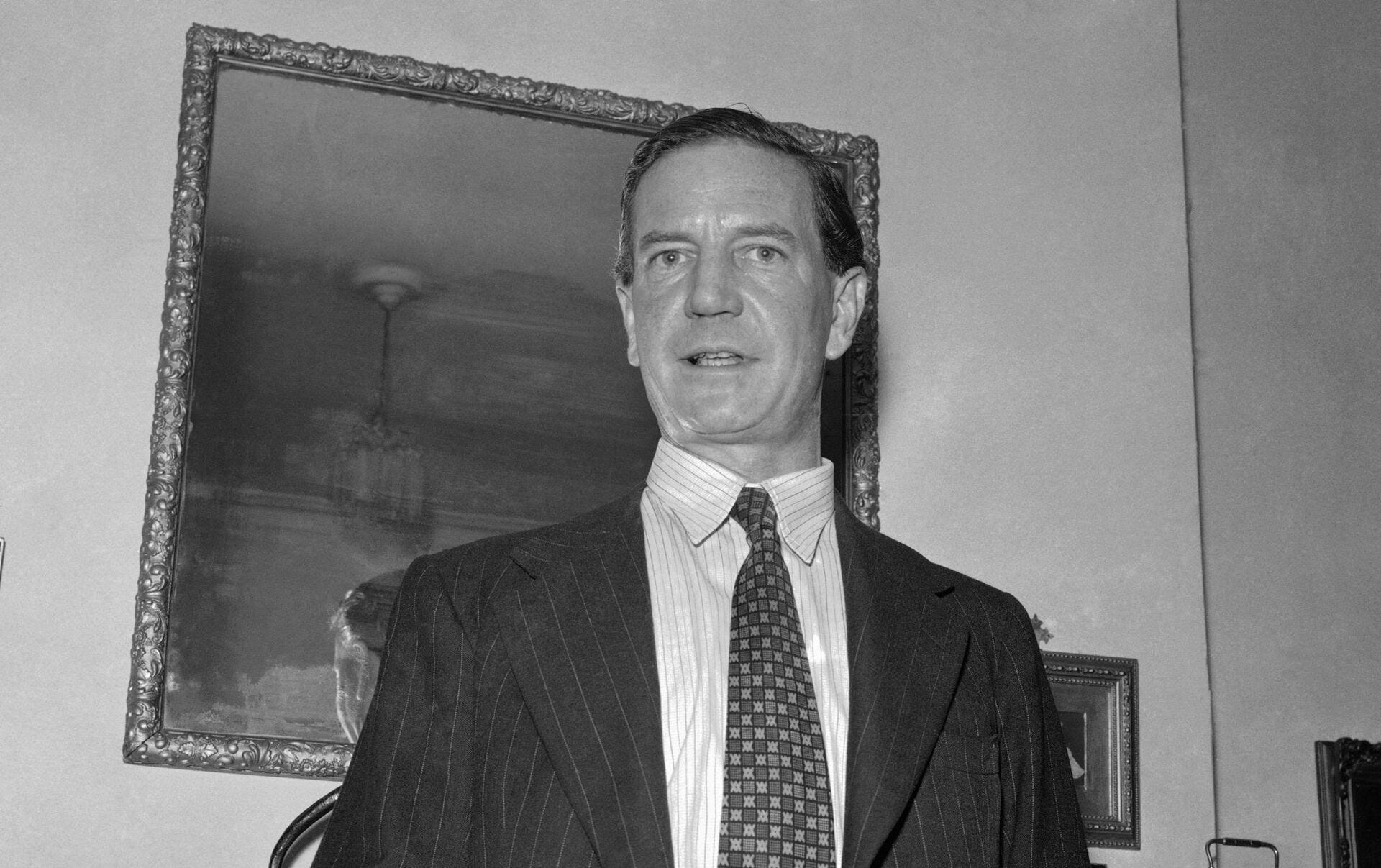
Valentine Vivian, deputy chief of MI6, was not a man encumbered by procedure. In 1939, asked to pass judgment on one Kim Philby — twenty-seven, Cambridge, lately back from reporting Franco’s Spain for The Times — he didn’t consult files or HR guidelines, but his memory. He had served with the young man’s father in colonial India. “I was asked about him,” the written record preserves him saying, “and I said I knew his people.” The vetting process thus completed, Philby got the job.
At the moment of his hiring, the new recruit had been a Soviet intelligence asset for six years. In the collegial environment of MI6, the unassuming Philby would eventually go on to run British counter-espionage against the Soviets. Social fluency helped too. He would later serve as MI6’s liaison in Washington to the CIA, the spycraft startup across the Atlantic for which he’d shown many early employees the ropes when they came on a business trip to their perfidious counterparts. Exposure of his true nature and allegiances would take another twenty-four years. All a young man required, apparently, was a father whom Vivian fondly recalled from evening drinks on another continent.
The hiring decision is usually considered a colossal failure, and by any standard of method or outcome, it is. An institution whose core business is secrets and double cross might be expected to do more than vouching. When a banker considers extending credit to a prospective customer, he mulls three questions. What has this man done before? What is this man’s status? What does this man stand to lose? The hard thing about banking is that these questions work, almost all of the time.
Still, what is there to examine, in a twenty-seven year old? Subtracting contemporary knowledge of the edifice Harold Adrian Russell “Kim” Philby constructed over a lifetime, how much of it could have been divined peering at the foundations?
Philby arrived at Trinity College in Cambridge in 1929, just as the Great Depression hit. To many intellectuals, it looked like capitalism itself was bankrupt. Philby and quite a few friends joined the Cambridge University Socialist Society. Elsewhere in Europe, the economic turmoil fueled the rise of far right authoritarian regimes, not least in Weimar Germany where it had landed hard on the heels of draconian post-World War I reparations. In Britain, the Labour Party catastrophically lost the 1931 general election after the incumbent Prime Minister Ramsay MacDonald’s government imposed reductions in unemployment benefits and other austerity cuts on the electorate. Parliamentary socialism looked bankrupt too.
Fresh out of Cambridge, Philby encountered Nazi brutality firsthand, while doing volunteer work in Vienna for a refugee organization. He also encountered Alice “Litzi” Kohlman: by his own account twenty-three, dark-haired, Jewish, vivacious, and already a “fully committed revolutionary.” By the time Mr. and Mrs. Philby returned to London, he was ripe for recruitment to serve what he considered the only credible bulwark against fascism. The first job coaching he received from the Soviets: tone down the socialist profile, cultivate a more right-oriented public persona — Nazi-sympathetic, even. Any of us hires Philbys every day of the week.
His initial track record at MI6 was understandably thin, slightly manipulated, and for the most part borrowed from family and friends. It didn’t stay any of those for long. Vivian was not naïve. In his institutional context, professional relationships were inevitably personal. Like his father before him, Philby knew his way around bars and gentlemen’s clubs. He liked to drink anyway, and it was good for business. In A Spy Among Friends, historian Ben Macintyre (a former foreign correspondent for The Times) observes how, when you cannot tell the world anything, you tell your colleagues everything.
“Members of the secret services were forbidden to tell their friends, wives, parents or children what they did, yet many were drawn to this closed clique, bound by shared secrets others must never know. In the civilian world, Elliott [another MI6 officer] never breathed a word about his job. But inside the secular monastery that is MI6 (…) he was among people he could trust utterly, and speak to openly in a way that was impossible outside.”
Ben Macintyre, A Spy Among Friends
Among secular monasteries, MI6 was unusual in degree but not in kind.
While Philby’s British credit came fast and by birthright, he had a harder time of it at that other institution where he had opened an account. In his sixth year spying for the communists, the Molotov-Ribbentrop Pact of 1939 was the first and only event that genuinely questioned his beliefs. The non-aggression pact between Berlin and Moscow meant his intelligence risked ending up in German hands. Philby ceased working for Moscow, until 3:15 AM on June 22, 1941, when Operation Barbarossa put an end to the pact’s short-lived existence. To welcome their old source back — one who had meanwhile worked his way into MI6, no less — Moscow lined up Elena Modrzhinskaya, described by Macintyre as “a plump, blonde, highly intelligent, politically doctrinaire and fabulously paranoid NKVD analyst.” Head of the British department at Moscow Center and a future ideological enforcer of proper thinking at the Institute of Philosophy, to say she was naturally skeptical would be like saying Stalin erred on the side of caution when confronting HR issues. Upon her fell the task of evaluating Philby’s work. It was, by any measurable standard, extraordinary. He was delivering names of British agents, intelligence, operational detail — almost exclusively about British activity against Germany, not the Soviet Union, to be sure. It was all very accurate — and therefore suspect.
Australian journalist Philip Knightley cites from Modrzhinskaya’s reports in his introduction to Philby’s autobiography My Silent War. “Could MI6 really be run by such fools that no one had noticed that precious information was leaking to Moscow?”, she rhetorically wanted to know from her superiors. “Next, was it really possible that Philby — with his Communist views, his work for the Communists in Vienna, and his Austrian Communist wife — had sailed through MI6’s vetting procedures?” Philby had his cadre of believers in Moscow, but Modrzhinskaya was effective in gathering support for her deep-seated conviction that their man had to be a double agent. Moscow did not, however, discard its asset solely on Modrzhinskaya’s say-so. The thing to do was to test Philby, following one of her threads. He was instructed to identify British agents inside the Soviet Union — never mind such agents were handled by an entirely separate branch of the service, well outside his normal operational perimeter. Philby outdid himself in effort and outcome. As Macintyre records:
“Philby duly sent a report to Moscow. It described Britain’s spies in the Soviet Union with typical bluntness: ‘There aren’t any.’ The station chief of MI6 in Moscow had not recruited a single major spy in the Soviet Union, Philby reported, and had only a few minor informants, mostly Poles. The USSR, moreover, was ‘tenth in the list of countries to which agents are to be sent.’ The files showed there was no British spy network in Soviet Russia, no MI6 espionage campaign, and ‘no Soviet citizens whatsoever who worked as secret agents either in Moscow or anywhere else on Soviet territory.’ The report was received with incredulity; Moscow’s paranoia, and sense of self-importance, combined to provoke a reaction of furious disbelief.”
Ben Macintyre, A Spy Among Friends
It’s hard to argue with Stalinian logic.
London didn’t backtest the way Moscow did. A senior officer’s word has weight attached to it that a junior’s can’t carry or manufacture — not because the senior is intrinsically more trustworthy, but because the institution has extended credit on the senior’s behalf. Without the shorthand of institutional rank, every transaction would have to be validated from first principles.
In August 1945, Konstantin Volkov walked into the British embassy in Istanbul with a proposition. He was deputy NKVD resident in Turkey — the NKVD being the enterprise that would eventually rebrand itself as the KGB — and he declared his intention to defect. Volkov was a diplomat, and diplomats present credentials: he announced himself ready to produce, among other intelligence, the names of three Soviet agents inside the British establishment. One of them, he said, ran a counter-intelligence office in London. That information had to travel to London by diplomatic bag. Volkov insisted on the bag rather than the wire, because he happened to know that the Soviets had compromised the wires. It would be un-British to take the word of a candidate-defector at face value; they continued to use the wires for their daily traffic. But it would also be un-British to break one’s word; they humored Volkov’s request and sent his case through the bag, adding weeks to the transit. When the bag eventually reached London, the MI6 Chief pondered the case, recognized the gravity of the material, and handed it to his most senior Soviet counter-intelligence officer — Kim Philby.
Philby received the file with inward alarm and outward composure, and promptly informed his London contacts of Volkov’s offer. A burst of radio traffic followed — London to Moscow, Moscow to Istanbul — which the British wire-watchers managed to intercept but failed to interpret. Philby meanwhile received marching orders to travel to Istanbul and take personal charge of the defector. He arranged his departure professionally, without undue haste. A defective aircraft required diversion through Tunis and then Cairo, which helped. By the time he reached Istanbul, the embassy had closed for the weekend. Philby called first on Knox Helm, the British minister, for Friday cocktails. The rest of the weekend idled by aboard the ambassador’s yacht, Makouk. On Monday morning, the ambassador cleared Philby’s assignment. But the phone lines were dead by then. Moscow had already seen to the Volkovs.
Volkov was sincere and made no mistakes. It made no difference. The failed defection troubled Sir Stewart Menzies, MI6’s Chief, enough to commission an after-action report to investigate what might have gone wrong.
“During the homeward journey, I roughed out a report which I would present to the Chief, describing in detail the failure of my mission. Necessarily, it contained my theory of Volkov’s disappearance. The essence of the theory was that Volkov’s own insistence on bag communications had brought about his downfall.”
Kim Philby, My Silent War
Philby concluded this summary by noting the one theory he deliberately chose to omit from the official report:
“Of course, I admitted, this was all speculation; the truth might never be known. Another theory — that the Russians had been tipped off about Volkov’s approach to the British — had no solid evidence to support it. It was not worth including in my report.”
Kim Philby, My Silent War
Philby understood the protective powers of status better than anyone. The one time he found himself on the receiving end, his autobiography accelerates.
“I was strap-hanging in the underground when I read the news. Looking over my neighbour’s shoulder, I saw my name in the headlines of the Evening Standard. Colonel Marcus Lipton, MP for Brixton, had asked the Prime Minister whether he was determined to go on shielding the dubious Third Man activities of Mr. Philby. My first reaction was one of intense disappointment. Lipton’s remarks were privileged and I could not get at him through the courts. (…) But my personal chagrin was soon swallowed up in the need for action.”
Kim Philby, My Silent War
Philby reasoned Lipton had no evidence. If he had, he would have handed it over to the authorities, and if they had it, Philby would already be under arrest. With the press camping out on the lawn of his Crowborough home, Philby took shelter in his mother’s house in South Kensington — but he did not issue any denials, which have a peculiar way of making the innocent sound guilty. Instead of taking on Lipton’s words, he went after his status.
“I then invited Lipton to produce his evidence for the security authorities or repeat his charge outside the House of Commons. . . . The ball was now in Lipton’s court. On the first evening, the BBC reported that he had attended the session of the House but had remained silent. The following evening, he gave in. His exact words were given me by a parliamentary reporter who asked me if I had any comment. . . . I decided that it was undeservedly fulsome and settled for a more non-committal formula: ‘I think that Colonel Lipton has done the right thing. So far as I am concerned, the incident is now closed.’”
Kim Philby, My Silent War
Philby would remain a free man for another eight years, albeit no longer on the MI6 payroll. However good his arguments were, his credit was gone.
For a new recruit, the question is whether he is trustworthy. For a seasoned spy, that is the wrong question — the right one is whether he is predictable. No matter how much trust he puts in a borrower’s character, a good banker puts more in his collateral. Philby didn’t so much fool everyone as they fooled themselves. They were all working off the wrong model of what he had to lose.
London conventionally assumed he had everything to lose — social standing, career prospects, personal relationships, reputation. Almost unlimited downside, and what was the upside? For once, Moscow concurred with the analysis. How easy would it be for Philby to turn on them and covertly defect back to the British? How little did he have to lose — how much to regain? All he would have to do was his job.
Philby, at least, had no illusions about his own position. His MI6 colleague Graham Greene wrote in the introduction to My Silent War: “In Philby’s own eyes he was working for a shape of things to come from which his country would benefit.” What he lacked in illusion, he had in conviction:
“it is a sobering thought that, but for the power of the Soviet Union and the Communist idea, the Old World, if not the whole world, would now be ruled by Hitler and Hirohito. It is a matter of great pride to me that I was invited, at so early an age, to play my infinitesimal part in building up that power. How, where and when I became a member of the Soviet intelligence service is a matter for myself and my comrades. I will only say that, when the proposition was made to me, I did not hesitate. One does not look twice at an offer of enrolment in an elite force.”
Kim Philby, My Silent War
Not that spies, even principled ones, are saints. Macintyre again:
“Beneath Philby’s golden charm lay a thick substratum of conceit; the charmer invites you into his world, though never too far, and only on his terms. (…) Philby tasted the powerful drug of deception as a youth, and remained addicted to infidelity for the rest of his life.”
Ben Macintyre, A Spy Among Friends
The Soviets might have been dismissive of the risks their man ran; that man saw things differently when he almost got caught with incriminating documents while on journalistic assignment. “(…) my first challenges came in Germany and in Fascist Spain, both countries with a short way of despatching enemy intelligence agents.” On another trip, surveying Spanish combat lines, he was the only survivor when the car he traveled in was accidentally hit by a shell. (It had been manufactured in the Soviet Union.) The incident earned Philby a decoration for valor, personally pinned on by Franco.
Back in Britain he would risk lifelong imprisonment, if not the death penalty. The Albanian operation, which ran from 1949 to 1953, reveals a Philby unencumbered by sentiment about the grimmer aspects of his work. British and American intelligence planned to insert teams of Albanian exiles into the country to organize resistance against the communist government. Philby, MI6’s liaison in Washington, had full operational detail from his friends at the CIA. He attended his cocktail parties, then filed his reports. In Albania, the security services were lying in wait. Historian Nicholas Bethell estimates direct casualties alone at about 300.
“The agents we sent into Albania were armed men intent on murder, sabotage and assassination. They knew the risks they were running. I was serving the interests of the Soviet Union and those interests required that these men were defeated. To the extent that I helped defeat them, even if it caused their deaths, I have no regrets.”
Kim Philby, My Silent War
Collateral damage.
CODA
Philby lived under the constant mental strain of being only one well-informed defector away from discovery. In 1963, he was finally left with no other option than to trade his gin for vodka. He was about to discover what the credit he had accumulated over three decades with Moscow was worth. It was not entirely what he had been led to believe. The promised rank of KGB Colonel (which, among other deserving people, Elena Modrzhinskaya had retired with) was withheld. Moscow provided Philby with modest housing, a modest position, and the modest income of 500 roubles per month. Whether he felt betrayed, we do not have on record. What we do know is that he stayed. The British made overtures to turn him; he declined. In May 1988, Kim Philby died in his Soviet Union — four months before Gorbachev began dismantling it.
Even in retrospect, it’s not obvious what and who to believe. Least of all Philby on Philby. My Silent War is eloquent on people and events at MI6, but less talkative about the Soviet side. Written during his time in exile, it must have been read and cleared for publication by the KGB. His facts are consistent with the record.
For John Pierpont Morgan, astute banker if ever there was one, it still came down to judgment. “The first thing is character, before money or property. Because a man I do not trust could not get money from me on all the bonds in Christendom.”
A framework is useful for analysis, helpful for prediction, and silent on character.
Author’s Note. The grid cells, and the pattern interactions within, are not unique to the field of negotiation. Observing them in a different context adds perspective and gives texture to the cell. Start here to learn more about the Negotiation Pattern Language itself.